
1. Adding Extra Levels to Standard Racking: Ideal for Limited Clear Height
Adding levels to conventional beam racking is a cost‑effective solution for heavy‑duty warehouses with limited headroom, suitable for forklift‑operated full‑pallet heavy‑goods storage.
✅ Advantages: No extra height loss, low modification cost, high operational efficiency. Fully forklift accessible with no manual climbing. Flexible assembly and robust stability; minimal fire‑safety modification required.
⚠️ Notes: Do not add levels blindly. Leave sufficient clearance for goods, pallets, beams and forklift operation. Never place the top level too close to building beams to prevent collision risks and stability issues.
Best for warehouses with clear under‑beam height ≥3.6 m, storing heavy full pallets.
2. Mezzanine Racking: Space Expansion for High‑clear‑height Small‑item Warehouses
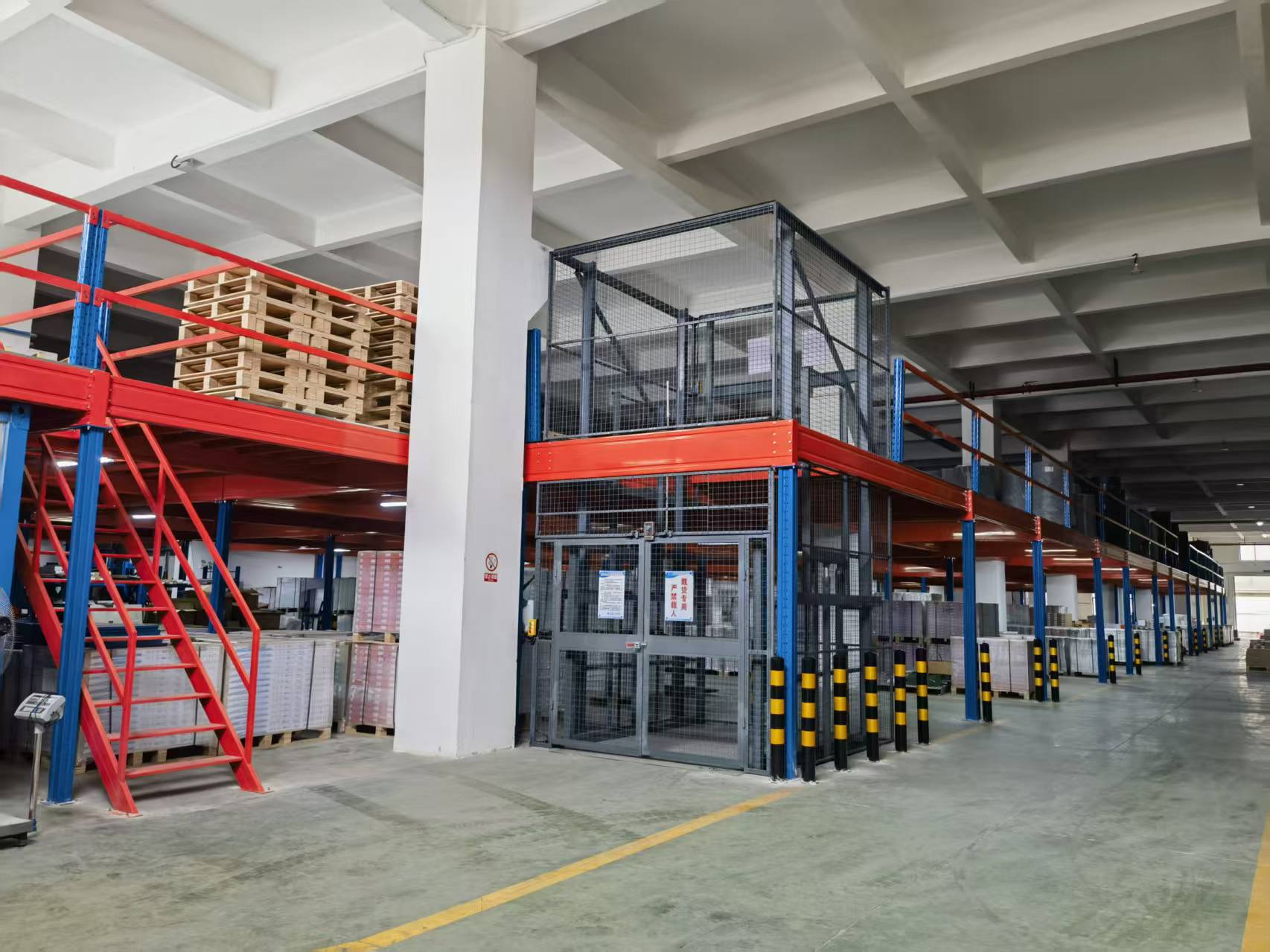
Mezzanine racking builds a steel‑structure platform to split warehouse space and expand storage capacity, designed for manual picking of small‑size, fast‑moving SKUs.
⚠️ Notes: Mezzanine floor and framing consume 300‑450 mm height. Minimum clear height of ≥2.2 m is required for both upper and lower floors for safe personnel movement. Mezzanine is not recommended if under‑beam clear height is below 4.8 m.
Higher investment cost. Classified as a structure, it requires sprinkler systems and emergency escape routes with complex compliance procedures.
Best for warehouses with ample headroom focusing on small‑goods storage.
3. Quick Selection & Pitfall Avoidance
Choose added‑level standard racking: Under‑beam clear height below 4.8 m, heavy pallet loads, forklift operation, minimal fire‑system changes. Best cost‑performance and safety.
Choose mezzanine racking: Under‑beam clear height ≥5 m, small bulk goods, extra storage area needed, fire‑system modification acceptable.