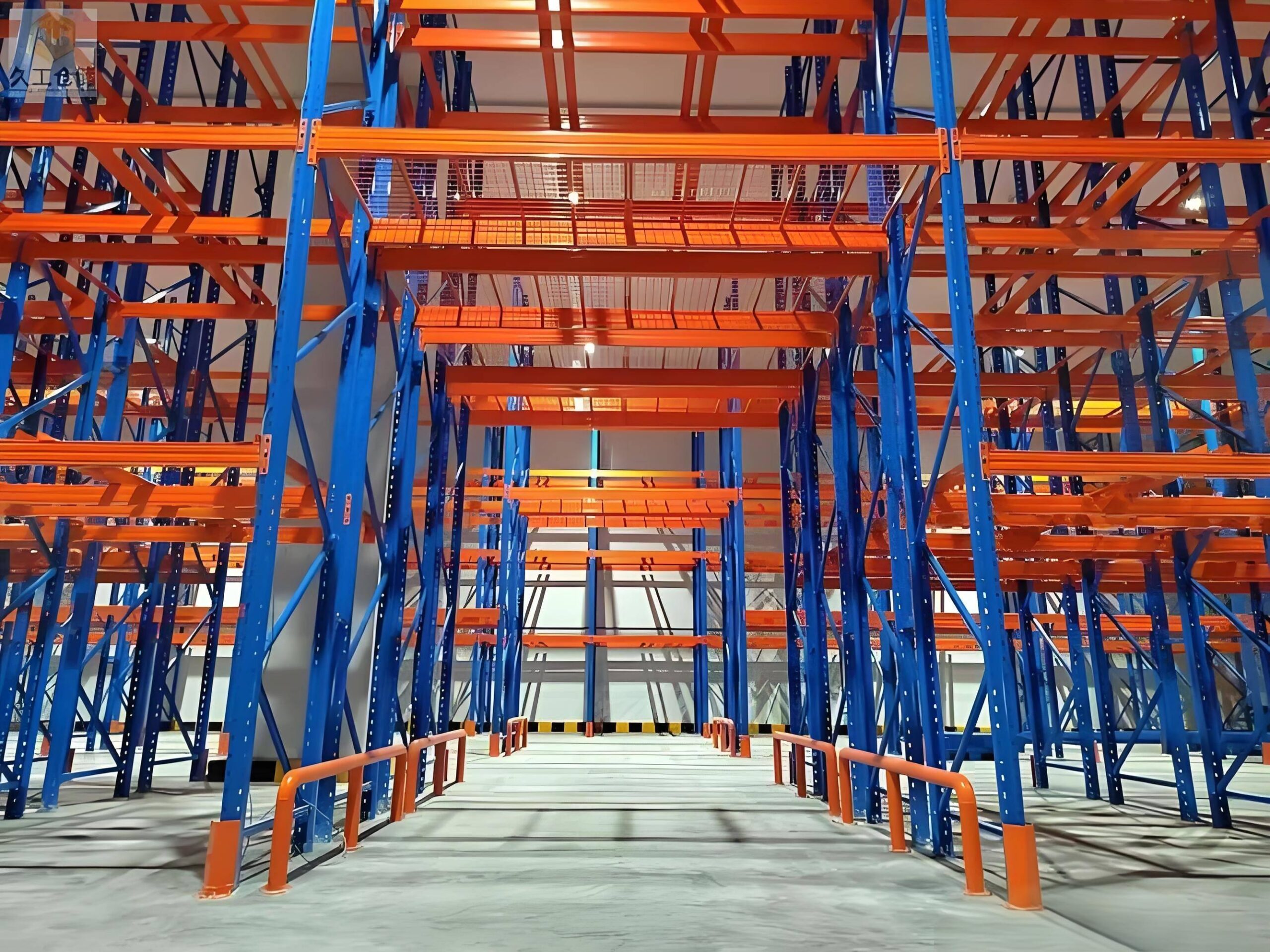

1.Product Introduction
(1)Beam Capacity
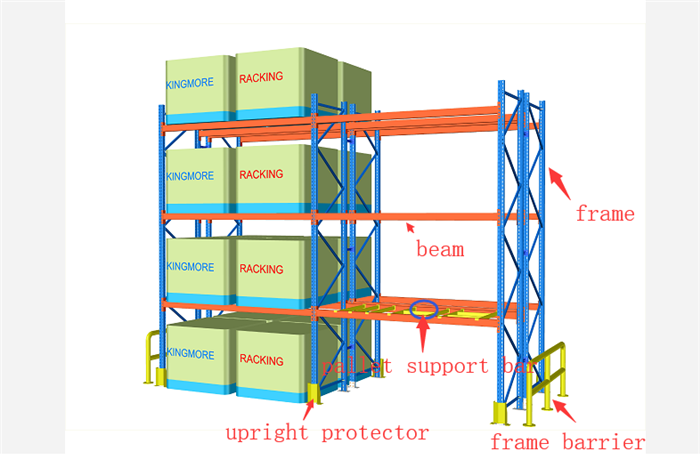
Beam load capacity is simple to calculate as a clear figure. Most beams have a standard dual-beam capacity, which refers to the load per level (two beams together) — for example, 2000 kg per level, not per single beam. Loads must be evenly distributed. You can place two pallets on one level, with each pallet up to 1000 kg.
(2)Upright Capacity
Upright capacity is more complex, as it depends on vertical beam spacing (unsupported span). Generally, larger spacing between levels reduces rack load capacity, since fewer beams mean less structural support for uprights.
Wider spacing works for tall, light goods; smaller spacing is needed for dense, heavy products. All rack manufacturers provide upright load capacity tables online or in print, showing total capacity based on upright types and vertical spacing.
If you have any questions about warehouse pallet racking, feel free to contact us.
2.Rack Capacity Recommendations
(1)Always ensure your floor can support the total weight of racks and maximum load. Do not take floor capacity for granted.
(2)Racks must be anchored to the floor to achieve their rated load capacity.
(3)Beams, connectors and safety pins must be properly installed.
(4)Frame and beam load capacities refer to static loads only.
(5)Deduct the weight of beams, frames, decking and accessories from the total rated capacity.