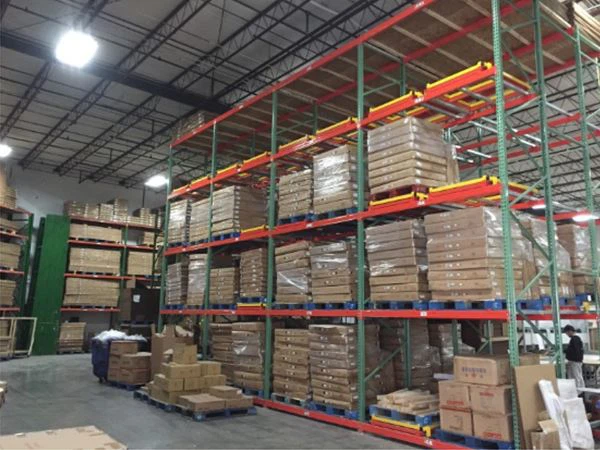
In today’s fast-moving supply chain and warehouse operations, storage solutions play a critical role in ensuring efficiency, safety, and space utilization. One of the most widely adopted systems is the beam-type high bay rack, a storage method designed to accommodate palletized goods at great heights. But what makes this system unique? A beam-type high bay rack consists of upright frames and horizontal load beams that create adjustable levels for pallet storage. Its modular design allows operators to customize the number of levels, spacing, and configuration according to the load requirements. Unlike simple shelving, beam-type racks are engineered for heavy-duty usage, making them indispensable in industries such as logistics, manufacturing, food distribution, and retail. By enabling vertical storage, warehouses maximize cubic space instead of only floor area, leading to a more cost-effective operation. At the same time, the system ensures accessibility, since forklifts can directly retrieve pallets from any beam level. As automation becomes more prevalent, beam-type racks are also compatible with automated storage and retrieval systems (AS/RS), adding long-term value. To fully appreciate their importance, it is essential to explore not only what they are but also how they enhance safety, efficiency, and scalability in modern facilities.
How Does a Beam-Type High Bay Rack Improve Storage Efficiency?
The primary advantage of a beam-type high bay rack lies in its ability to optimize warehouse storage capacity. Unlike floor stacking or static shelving, this system leverages height, allowing facilities to store more pallets within the same footprint. Each rack bay can be customized with load beams placed at varying intervals, offering flexibility for handling products of different dimensions. For businesses dealing with high product turnover, efficiency is paramount. Forklift operators can quickly access individual pallets without moving others, which reduces retrieval times compared to block stacking. This selectivity minimizes handling costs and helps reduce product damage, which often occurs when items need to be shifted repeatedly.
Additionally, the open structure of a beam-type rack allows better airflow and light penetration, which can be beneficial in industries requiring climate control or hygiene standards, such as pharmaceuticals and food storage. Efficiency is also achieved through its modular nature—additional bays can be added as business needs expand, eliminating the requirement for entirely new infrastructure. Warehouses benefit from improved picking speed, reduced operational bottlenecks, and higher throughput rates. In summary, the beam-type high bay rack is not just a storage system; it is a productivity multiplier that helps businesses handle growing inventory volumes while minimizing wasted space and labor.
What Safety Benefits Come with Beam-Type High Bay Racks?
Safety is a paramount concern in any warehouse, and beam-type high bay racks are designed with structural integrity and worker protection in mind. The system uses high-strength steel uprights and load beams engineered to handle significant weight capacities. Beams are often secured with safety locks or clips that prevent accidental dislodgement during loading and unloading. This reduces the risk of racks collapsing under heavy loads. For additional stability, the racks can be anchored to the warehouse floor, ensuring they remain secure even under high traffic conditions.
Another key safety feature lies in the rack’s ability to support load distribution. By positioning pallets evenly across beams, weight stress is minimized, which prolongs the rack’s lifespan and reduces structural failures. Many warehouses also install safety accessories such as pallet supports, wire decking, and backstops, all of which help prevent items from falling during handling. The open access design allows forklift operators to maneuver safely, decreasing the risk of collisions or product damage. Moreover, compliance with recognized international safety standards ensures that racks undergo rigorous testing before installation. Proper training for staff is also an integral part of safety, as even the most durable racks can become hazardous if used incorrectly.