
Pallet racking systems use adjustable beams for flexible storage layouts and future expansion. While modular, this design creates potential safety risks: beams can be accidentally lifted or dislodged during daily warehouse operations.
Beam safety pins are critical components that directly affect the structural stability of the entire racking system.
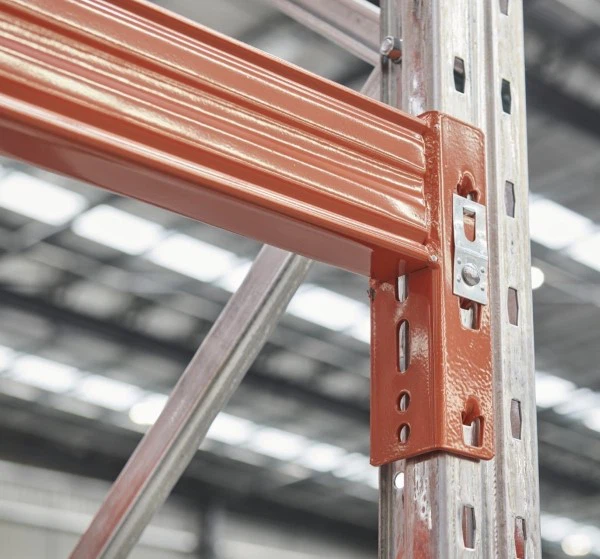
1. Core Function of Beam Safety Pins
Installed at beam-to-upright connections, beam safety pins lock beams in place and prevent upward movement or accidental dislodgement.
Beams experience upward forces more often than many operators realize, especially during:
Forklift impacts during pallet handling
Angled pallet placement or removal
Heavy, uneven, or frequently adjusted loads
Without safety pins, even brief upward tension can cause beam hooks to slip out of upright slots, leading to partial instability or progressive rack collapse. Safety pins eliminate this risk by mechanically locking beams in position.

2. Safety Pin Designs for Different Racking Systems
Beam safety pins are not one-size-fits-all; designs vary by rack structure, load requirements, and regional standards. Common types include:
Spring-loaded safety locks
Insertable safety pins
Bolted or clip-on pins
Integrated locking tabs within beam connectors
While locking mechanisms differ, all designs share the same core purpose: preventing beam uplift and ensuring a secure connection between beams and uprights during daily operations. The correct safety pin design must always match the racking system’s design and operating conditions.
3. Compliance with International Racking Standards
International racking standards such as AS4084, RMI, and EN 15620 require or strongly recommend the use of beam-locking devices.
Beam safety pins are a key checkpoint in warehouse safety inspections. Missing or improperly installed safety pins can result in:
Non-compliance with safety standards
Increased liability risks
Higher chances of rack damage and workplace injuries
Using compliant safety pins is not only a technical requirement but also a fundamental part of responsible warehouse management.