
For enterprises troubled by insufficient warehouse and operation space, industrial mezzanines serve as an efficient vertical space expansion solution. This guide covers core mezzanine knowledge including structural composition, industry applications, cost-effective compliant procurement, relevant regulations, design, manufacturing and installation processes, as well as post-project maintenance and safety management, helping enterprises implement high-quality mezzanine projects.
1. Mezzanine Definition Systems
A mezzanine is an independent upper platform built between the original floor and ceiling of a building. It expands operational and storage space by utilizing vertical space without altering the building’s original main structure. Industrial mezzanines are steel-structured with high stability and load-bearing capacity, consisting of the following core components:
1. Columns: Vertical load-bearing core components that evenly disperse pressure to ensure overall structural stability. The number of columns is customized based on the mezzanine size and load demands. Small light-duty mezzanines adopt four corner columns, while heavy-duty large-scale ones require additional columns. Column guards can be installed in high-collision areas to protect columns from equipment impact.
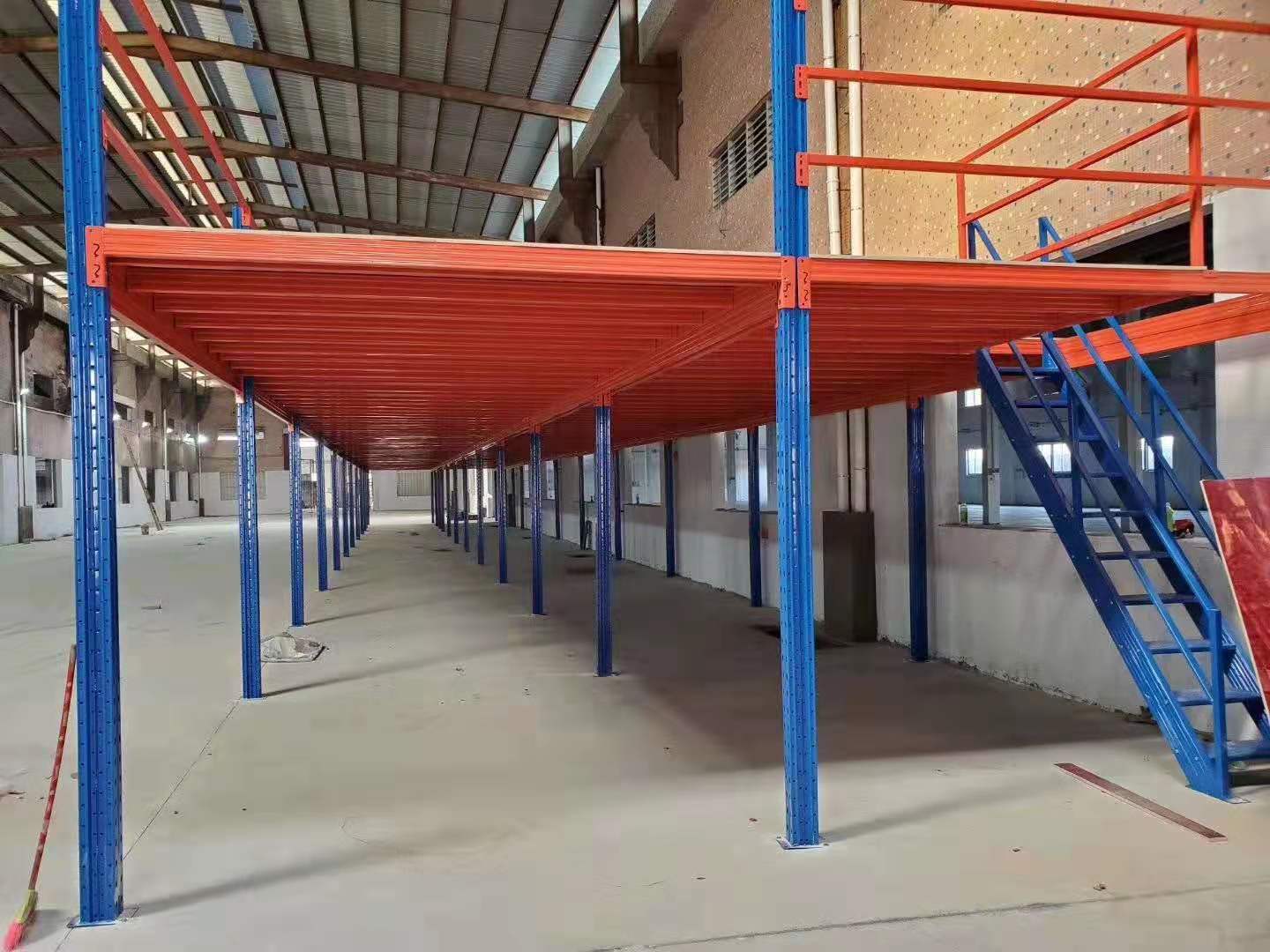
2. Base Plates: Flat square steel plates fixed to the floor with bolts. They serve as stable bases for columns, preventing tilt and shake and enhancing overall structural firmness.
3. Main Beams: Arranged in a grid pattern to form the outer frame of the mezzanine platform, laying the foundation for the overall structural strength of the steel frame.
4. Purlins: C-shaped steel bars installed between main beams to shape the basic frame of the mezzanine.
5. Joists: Running through the full length of the mezzanine to further strengthen structural stability and meet diverse load-bearing requirements.
6. Edge Protection: Steel handrails are equipped on all exposed suspended edges, with gaps sealed by glass, wire mesh or steel plates to prevent falling risks and ensure operational safety.
7. Stairs: Dedicated access facilities prioritizing safety. Their material, color, shape and installation position are customizable to adapt to different site styles and personnel passage needs.
After the steel structure is assembled, special decking is laid to form a complete and flat working floor, forming a fully functional mezzanine space.
2. Mezzanine Floor Deck Selection
Common deck materials include particleboard, steel plate and open steel grating, which can be selected according to load-bearing capacity, anti-slip performance and durability to fit different operation scenarios:
1. Load-bearing Capacity: The floor load range of various decks is 1,000kg to over 3,500kg per square meter. Open steel grating offers the highest load-bearing performance for heavy-duty storage and equipment operation, while particleboard is suitable for light-duty warehousing and auxiliary office scenarios.
2. Anti-slip Performance: Textured floor tiles can be laid on particleboards to improve skid resistance at low cost for conventional dry working environments. Steel plates with raised diamond patterns provide superior anti-slip and wear resistance for high-frequency walking and humid working scenarios.
3. Durability: Particleboards apply to light-duty and low-frequency operations. Steel plates and open steel gratings feature high rigidity, deformation resistance and vibration resistance, ideal for long-term heavy-duty industrial operations.