
1. What is Drive-in Racking
GeZhi drive-in racking allows pallets to be stored deep along rails. Forklifts enter the rack from one side to load and unload goods for high-density storage.
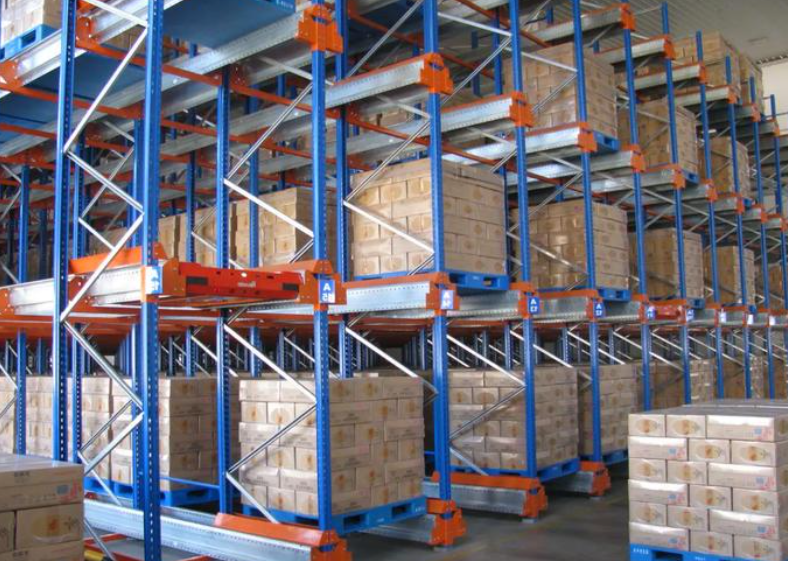
2. Types of Drive-in Racking
GeZhi drive-in racking adopts the LIFO (Last In, First Out) principle, while drive-through racking follows FIFO (First In, First Out). Ground rails are recommended to guide forklifts and protect rack structures.
Two categories based on access ways:
Single drive-in racking
Double drive-in racking
GeZhi drive-in racks are fitted with high-visibility column protectors and ground rails to extend service life. Separate entry guides and ground rails enable quick replacement after damage. The guides extend 200mm outward to prevent forklift collisions with the main rack frame.
3. Suitable Application Scenarios
Goods requiring cold or freezer storage
Massive volumes of identical goods with limited warehouse space that need high-density storage
Fragile goods that cannot be stacked directly
4. Product Advantages
Cold storage rental fees are costly; this rack maximizes storage capacity within limited space.
For large batches of identical palletized goods, it eliminates numerous forklift aisles required by standard selective racking and greatly boosts space utilization.
5. Product Disadvantages
Prone to damage from improper forklift operation, demanding high structural strength and durability of the rack.
Standard models follow LIFO rules: newly stocked goods block the front, making old stock hard to ship out first and likely to cause inventory backlog.