
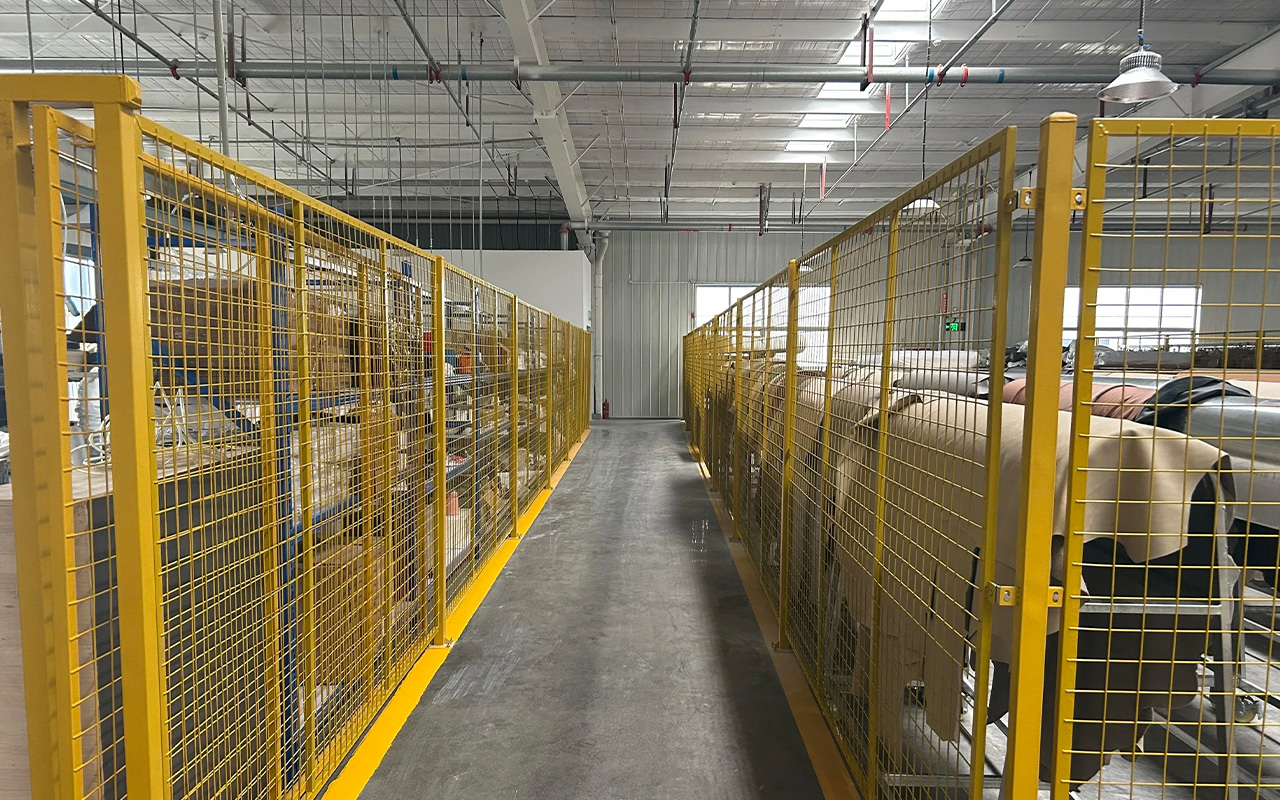
Safety guardrails are widely used on construction sites, warehouse mezzanines, rooftops and balconies. Facility managers and contractors often face compliance confusion.
1. What is the legal height for industrial safety guardrails?
Under OSHA 1926 Subpart M, industrial guardrails need a 42-inch top rail (±3-inch tolerance) and a 21-inch middle rail. Toeboards must be at least 3.5 inches tall with less than 0.25 inches of floor gap to stop falling debris. Residential balcony guardrails follow local codes, with a standard minimum height of 36 inches.
2. Are guardrails and handrails interchangeable?
No. The two serve distinct purposes. Handrails only support balance on stairs and ramps. Guardrails are edge fall-protection barriers built to block full-body falls. Only guardrails satisfy OSHA safety rules for unprotected floor edges.
3. How much force must compliant guardrails withstand?
Permanent metal guardrails must bear 200 pounds of outward or downward pressure on the top rail, without deforming below 39 inches. Plastic and wooden temporary guardrails fail standard load tests and are only allowed for short-term, low-traffic work zones.
4. When are guardrails mandatory instead of safety harnesses?
OSHA prioritizes passive guardrails over wearable safety harnesses. Guardrails are required for all open edges with a fall risk above 6 feet. They eliminate human error risks, unlike harnesses that depend on correct worker use.
5. What materials work best for outdoor guardrails?
Bare carbon steel is unsuitable for outdoor settings. Powder-coated aluminum offers cost-effective corrosion resistance for rooftops and parking lots. 304 stainless steel suits coastal saltwater areas, while galvanized steel works for inland industrial sites with yearly anti-rust maintenance.
6. What are the top guardrail OSHA violation causes?
Three mistakes cause over 80% of penalties: missing middle rails, loose post connections, and panel gaps wider than 19 inches. Most issues happen during rushed reinstallation after on-site repairs, not initial installation.
7. How often should guardrails be inspected?
High-traffic indoor guardrails need monthly visual checks for bent posts, broken welds and loose bolts. Outdoor guardrails need quarterly structural checks, especially after storms or collisions. Damaged guardrails require full replacement, not temporary patching.
Final Takeaway
Stick to OSHA height and load standards, separate guardrails from handrails, and follow regular inspection schedules. Properly installed guardrails deliver low-effort, reliable fall protection.