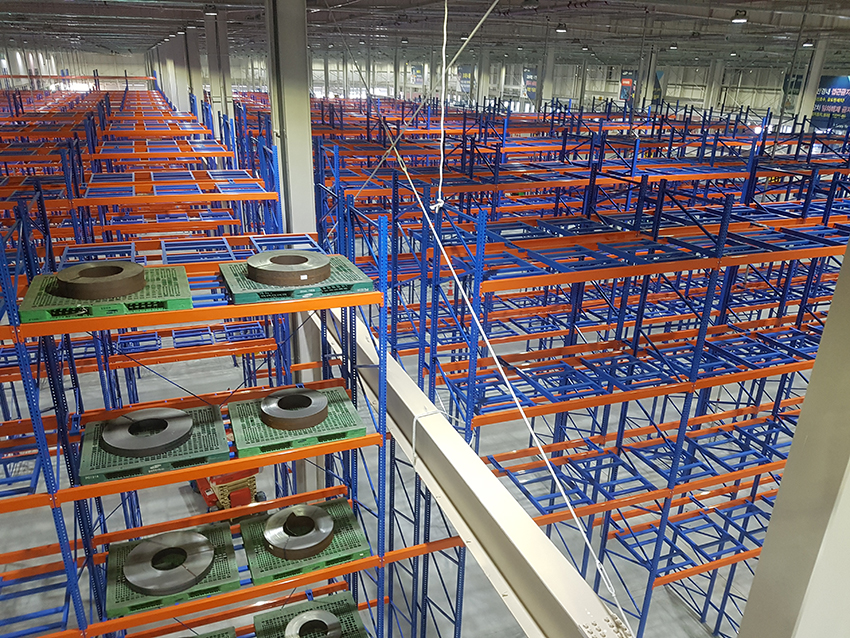
As logistics and warehousing industries expand globally, businesses are raising higher standards for storage capacity, order handling efficiency and warehouse space utilization. Facing limited building footprints and surging land rental costs worldwide, warehouse planners across manufacturing, cold chain and e-commerce sectors are seeking practical solutions to store more goods within existing facilities while streamlining daily warehouse operations.
1. Why High-Density Storage Systems Become A Dominant Warehouse Trend
Traditional warehouses allocate massive floor areas to forklift aisles, equipment travel zones and auxiliary operation zones-none of which can hold inventory. Expanding warehouse buildings is neither affordable nor sustainable for long-term business growth amid rising land expenses.
The core logic of high-density warehousing lies in scientific layout optimization to lift overall space efficiency: reshaping rack layouts, cutting redundant aisle space and fully utilizing vertical building height to hold more pallets or cartons within the same warehouse footprint.
Compared with conventional selective racking, high-density storage systems deliver these tangible business benefits:
* Higher warehouse space utilization rate
* Larger storage capacity per unit floor area
* Lower capital expenditure on warehouse expansion
* Streamlined inbound & outbound material handling workflows
For manufacturing plants, regional distribution centers, cold storage warehouses and e-commerce fulfillment centers that require massive storage density, custom high-density racking solutions have become a core competitive advantage in supply chain management.

2. How High-Density Storage Maximizes Warehouse Space Utilization
2.1 Minimize Aisle Footprint to Expand Usable Storage Area
Standard warehouse racking requires broad permanent aisles for forklift circulation, which occupy valuable floor space without storage value. High-density storage architectures reduce unnecessary aisle space by shifting pallet transport tasks to in-rack automated shuttles, removing the need for frequent forklift entry into storage lanes and drastically lifting overall storage density.
This design fits warehouses with large pallet batches and bulk homogeneous inventory perfectly.
2.2 Leverage Vertical Height for Multi-Level 3D Storage
Beyond optimizing horizontal floor space, tapping into vertical building height is another critical method to scale storage capacity. Modern high-density storage systems combine high-rise pallet racks, multi-tier storage structures and automated retrieval equipment, transforming flat single-layer warehouses into vertical 3D storage facilities.
By utilizing full ceiling height, enterprises scale total inventory volume without leasing or constructing extra warehouse space, maximizing returns on existing warehouse assets.
2.3 Integrate Intelligent Automation to Lift Operational Throughput
Warehouse digitalization drives deep integration between high-density racking and intelligent handling robots, enabling precise, fast storage and retrieval to boost overall warehouse productivity.
* Four-way shuttle systems move freely along cross rails inside racks, ideal for high-density pallet storage projects
* Multi-tier mini shuttle systems operate across independent vertical tiers simultaneously, supporting high-frequency order picking for multi-SKU inventories
Matching automated equipment to actual order profiles helps businesses achieve both superior space utilization and smooth daily warehouse operation.