
Are you searching for the right pallet racking system among the many pallet racking types available on the market? Look no further! This guide will help you understand the different pallet racking types and provide insights into selecting the most suitable system for your warehouse.
It’s no secret that the right pallet racking system is crucial for optimising warehouse storage. It improves efficiency and ensures the safety of both products and personnel. However, how exactly can one achieve this? Fret not, as GeZhi Storage is here to share essential tips.
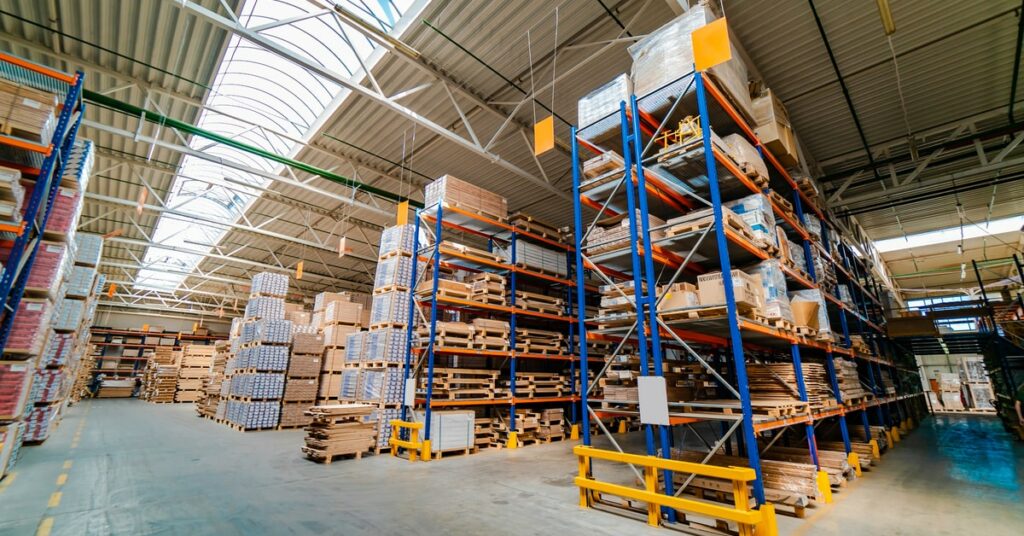
Factors to Consider When Choosing Pallet Racking Types
Inventory Characteristics
Understanding your inventory’s characteristics is the first step in choosing the right pallet racking system. Assess the physical dimensions and weight of the items to be stored to determine the right racking system to support them safely.
Additionally, consider the variety and volume of stock-keeping units (SKUs) you manage. Analysing these factors will help you select a system that can efficiently accommodate your inventory.
Warehouse Layout and Space Utilisation
Evaluate available floor space and ceiling height to maximise vertical and horizontal storage capacity. You should also determine the aisle width needed for forklifts or other handling equipment to manoeuvre efficiently between racks.
For a strategic approach to warehouse management, you must optimise vertical space and storage density. You can achieve this by selecting racking systems that allow for tiered storage, depending on your inventory and retrieval frequency.
Throughput and Selectivity Requirements
It’s also important to note how often and quickly items need to be accessed and moved within the warehouse. Firstly, evaluate whether your operations require immediate access to specific pallets without moving others.
Then, decide whether your inventory strategy follows first-in, first-out (FIFO) or last-in, first-out (LIFO) principles. FIFO ensures that older stock is used first, while LIFO may be suitable for operations where newer stock is preferred for immediate use.
Load Capacity and Durability
For this, several key factors should be carefully assessed, namely weight-bearing capacity, quality and strength of materials, as well as the pallet racking system’s ability to withstand impacts and maintain structural integrity.
For instance, you must match the weight-bearing capacity of the racking system with the weight of your stored goods. Ensure the racking system uses high-quality steel or other robust materials to withstand daily operations and maintain structural integrity over time.
Scalability and Adaptability
A versatile racking system should be compatible with these potential changes, ensuring that it can accommodate new inventory management strategies or technological advancements without requiring significant retrofitting or replacement.
Your racking system should allow for easy adjustments, reconfigurations, or expansions as your warehouse operations evolve. This adaptability helps maintain operational efficiency and maximise the lifespan of your storage infrastructure.
Budget and Return on Investment (ROI)
Regarding budget and ROI, you should consider the purchase price and installation and modification costs. Investing in an efficient pallet racking system can lead to significant long-term cost savings.
Plus, a well-designed racking system enhances warehouse productivity by facilitating faster retrieval times and minimising errors in inventory handling. This efficiency translates into reduced labour costs and enhances overall operational performance.