
Background
When overseas clients acquire old factories or rent warehouses with pre-installed racking, they often face a dilemma: can the existing racking stay in service? Should it be partially refurbished for reuse or fully replaced?
Based on Gezhi’s experience in overseas racking assessment, this article covers key evaluation criteria, refurbishment feasibility and potential risks of used racking to support sound warehouse upgrade decisions.
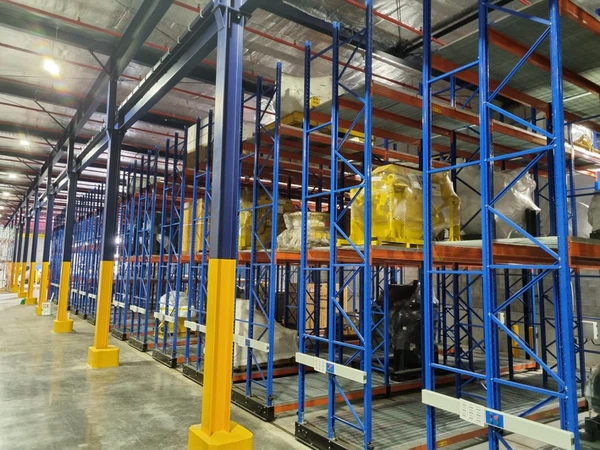
Key Points
1. Full Inspection Before Use
Do not load goods immediately. Complete these four checks:
- Structural damage: bent uprights from forklift impact, deformed beams, weld cracks, missing safety pins and loose bolts.
- Load capacity verification: confirm original load ratings and steel grades. Without load reports, safe working load cannot be determined.
- Compliance check: verify alignment with local standards including Australia AS4084, North America RMI and European EN series.
- Corrosion check: focus on rust at upright bases and beam connections for coastal and high-humidity warehouses.
2. Conditions Suitable for Refurbishment & Reuse (All must be met)
No structural deformation or cracks on main racking components with minor corrosion. Original drawings and load data available for structural review. Dimensions and load capacity match current goods and pallets.
Common refurbishment works: install upright protectors, safety pins, guardrails and wire decking; adjust beam heights; add new rack sections for mixed old-and-new layouts. Structural calculation documents must be issued after refurbishment to pass local audits.
3. Scenarios Recommended for Full Replacement (Any one applies)
Deformed uprights/beams, weld cracks or severe corrosion; no original drawings or load data for structural calculation; outdated racking failing current safety codes; incompatibility with pallets, goods or forklifts; hard-to-source spare parts and lack of after-sales support.
Many clients assume refurbishment saves cost. However, heavy damage requires extensive component replacement, repeated structural calculations and warehouse downtime. Total investment can be close to new racking with compromised structural safety.
4. Tips for Overseas Warehouse Refurbishment Projects
- Conduct site surveys and assessments at early stages to separate reusable and replaceable parts and avoid blind modifications.
- Be cautious mixing old and new racking. Mismatched steel specifications and design standards create safety hazards.
- Prepare compliance documents. Local auditors require load calculations and certificates, even for refurbishment projects.
- Unauthorized on-site cutting or welding is prohibited. It weakens steel performance and is banned under most overseas racking standards.
Kesimpulan
Used warehouse racking is not always scrappable, but it should not be retained merely to cut costs. Reusability depends on structural integrity, traceable load data and compliance with local regulations. For heavily damaged racking without complete documentation, full replacement delivers better safety and long-term value.
Gezhi provides customised warehousing solutions tailored to site conditions and local standards. Feel free to contact us for your warehouse upgrade projects.