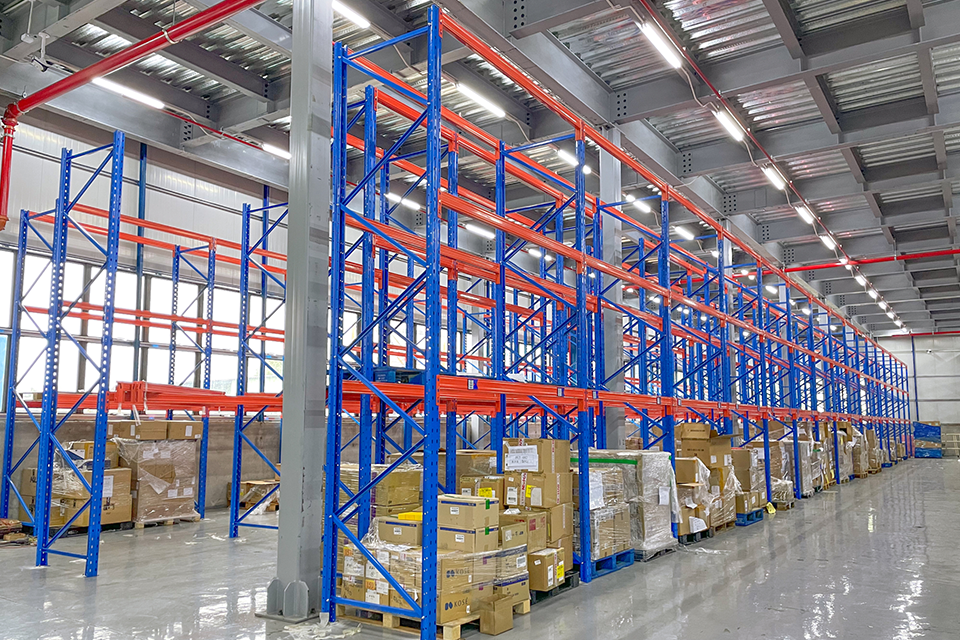
Forklifts are industrial handling vehicles for loading, unloading, stacking and short‑distance palletized‑goods transport. Racks are essential warehouse storage units with standardized dimensions and load capacities. Their coordination requires consideration of both forklift and rack parameters.
In large warehouses, frequent forklift and stacker operations often result in rack collisions, damaging guardrails, rack uprights and pallets. Key preventive measures are as follows:
- Warehouse layout & rack design: Appropriately widen rack aisles based on site conditions to reserve operating clearance for forklift operators and reduce impacts on rack uprights.
- Floor traffic marking: Apply visual speed‑reduction lines on aisle floors instead of simple warning signs to counteract visual‑judgment errors caused by fast‑speed operation.
- Protective accessories: Install fork sleeves on forklifts and protective guards for rack uprights and barriers to mitigate collision damage.
- Operator training & assessment: Conduct pre‑job training for new forklift operators and implement regular post‑hire evaluations to raise safety awareness.
In summary, minimizing forklift‑rack collisions relies on staff awareness and continuous skill improvement.