
What Is a Mezzanine? (Mezzanine Systems Definition)
A mezzanine system is a freestanding, intermediate platform built between a building’s main floors or within high-ceiling spaces to create extra usable area. It is a partial, modular steel structure that does not count as a full story.
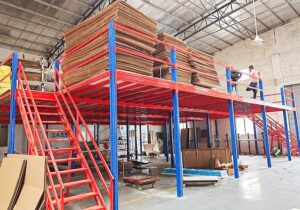
Key features:
- Covers less than 1/3 of the floor area below
- Open or semi-open to the space beneath
- Bolt-together, relocatable and expandable
- Does not increase official building story count
- Ideal for warehouses, factories, storage and offices
What Is a Standard Floor?
A floor (full story) is a permanent, full-coverage structural level of a building. It spans the entire footprint, is fully enclosed, and is officially counted as one story of the structure.
Key features:
- Full building-width coverage
- Permanent construction with foundations and walls
- Counted in floor area, height limits and zoning
- Fixed, non-relocable design
Mezzanine vs Floor: Main Differences
- Coverage: Mezzanine = partial area; Floor = full area
- Structure: Mezzanine = modular & freestanding; Floor = permanent & integrated
- Installation: Mezzanine = fast, low disruption; Floor = long construction, high cost
- Building code: Mezzanine = not a full story; Floor = counted as an official story
- Flexibility: Mezzanine = movable & expandable; Floor = fixed
- Cost: Mezzanine = more affordable; Floor = expensive
Benefits of Mezzanine Systems
- Maximize unused vertical warehouse space
- Lower cost than building a new floor
- Quick installation with minimal downtime
- Customizable for storage, workstations or offices
- Avoid strict story-count zoning rules
Kết luận
A mezzanine is a flexible, partial elevated platform, while a floor is a full, permanent structural story. Mezzanine systems are the cost-effective, fast solution for adding space without new construction.